The Gyanvapi Case (Varanasi)

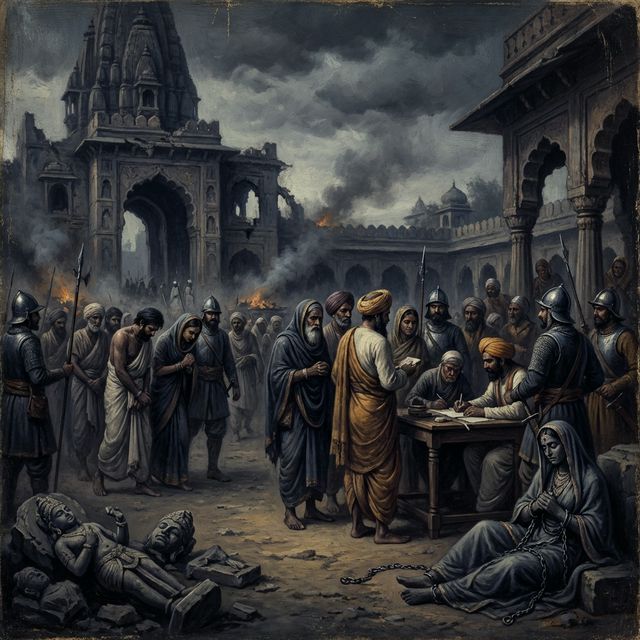
The Kashi Vishwanath Temple — demolished by Aurangzeb in 1669 — remains India's most contested religious site:

  • 1669: Aurangzeb demolishes the ancient temple and builds the Gyanvapi Mosque on its ruins
  • 1991: Places of Worship Act freezes the status of all religious sites as of August 15, 1947
  • 2021: Hindu petitioners file suits claiming the right to worship at the original temple site
  • 2022: Varanasi court orders ASI survey of the mosque premises
  • 2023: ASI survey report confirms Hindu temple remnants beneath the mosque structure
  • 2024–2026: Case continues in multiple courts. The constitutionality of the Places of Worship Act itself is being challenged in the Supreme Court

The original temple's western wall — with its visible Hindu carvings — still stands as part of the mosque structure. This is not a matter of faith or belief — it is visible, physical, archaeological evidence.

The Mathura Case

The Krishna Janmabhoomi — demolished by Aurangzeb in 1670 — is another active legal battle:

  • The Shahi Idgah mosque sits adjacent to the rebuilt Shri Krishna Janmasthan temple
  • Multiple lawsuits filed seeking the removal of the mosque and full restoration of the temple
  • The 1968 agreement between the temple trust and the mosque committee is being legally challenged
  • ASI and archaeological evidence supports the existence of a Hindu temple at the site

The Naming Controversy

Despite his documented atrocities, Aurangzeb was honored with streets, roads, and institutions named after him across India:

  • 2015: Aurangzeb Road in Delhi — a prominent road in the heart of the capital — was renamed to Dr. APJ Abdul Kalam Road
  • The renaming sparked national debate: Why was a road named after a ruler who destroyed temples, executed spiritual leaders, and reimposed Jizya?
  • Several cities still have localities, streets, or structures named after Aurangzeb
  • Each naming controversy brings the question of historical memory and justice to the forefront

The Whitewashing Problem

The academic sanitization of Aurangzeb's legacy continues in many places:

  • Audrey Truschke (2017): Published "Aurangzeb: The Life and Legacy of India's Most Controversial King" which attempted to rehabilitate Aurangzeb's image, claiming his temple destructions were "political, not religious"
  • NCERT textbooks: Continue to present Aurangzeb in nuanced terms that minimize his atrocities
  • Western media: Often frames criticism of Aurangzeb as "Hindu nationalism" rather than historical scholarship
  • Social media censorship: Content about Aurangzeb's atrocities is sometimes flagged or suppressed on social media platforms
⚠️ The Core Problem

The most damaging aspect of Aurangzeb's legacy is not what he did — it is that Indians were systematically denied knowledge of what happened. Education is the antidote. This website, and the broader Bharat Files Initiative, exists to fill that gap.

What Can Be Done

  • Education: Share accurate, source-backed history with your family, friends, and community
  • Legal advocacy: Support the legal efforts to reclaim temple sites through democratic and constitutional means
  • Textbook reform: Advocate for historically accurate textbooks that include, not exclude, documented atrocities
  • Research support: Support scholars and institutions doing honest historical research
  • Cultural preservation: Support efforts to rebuild, restore, and protect Hindu cultural heritage
Next Chapter
Sources & References →
Verify the Sources